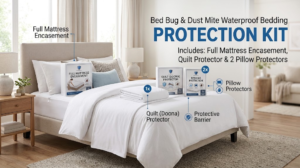

How to Wash a Waterproof Mattress Protector: Australian Care Guide to Cleaning, Drying and Maintaining Your Protector
A waterproof mattress protector helps protect your mattress from spills, moisture, everyday stains and general wear. Knowing how to wash a waterproof mattress protector correctly is important for maintaining its fabric, waterproof backing and overall performance.
Although many waterproof mattress protectors are machine washable, the correct washing temperature, detergent, drying method and care routine depend on the individual product. Following the manufacturer’s care instructions helps maintain the materials and avoid unnecessary damage to the waterproof membrane.
At Cover & Protect, we specialise in mattress and bedding protection products for Australian households, accommodation providers and commercial venues. Established in 2007, we are an authorised direct-to-consumer distributor of genuine Protect-A-Bed® bedding protection products in Australia, supplied through official Australian distribution channels.
This guide explains how to clean, wash, dry and maintain waterproof mattress protectors, including practical advice for different fabrics and common washing mistakes.
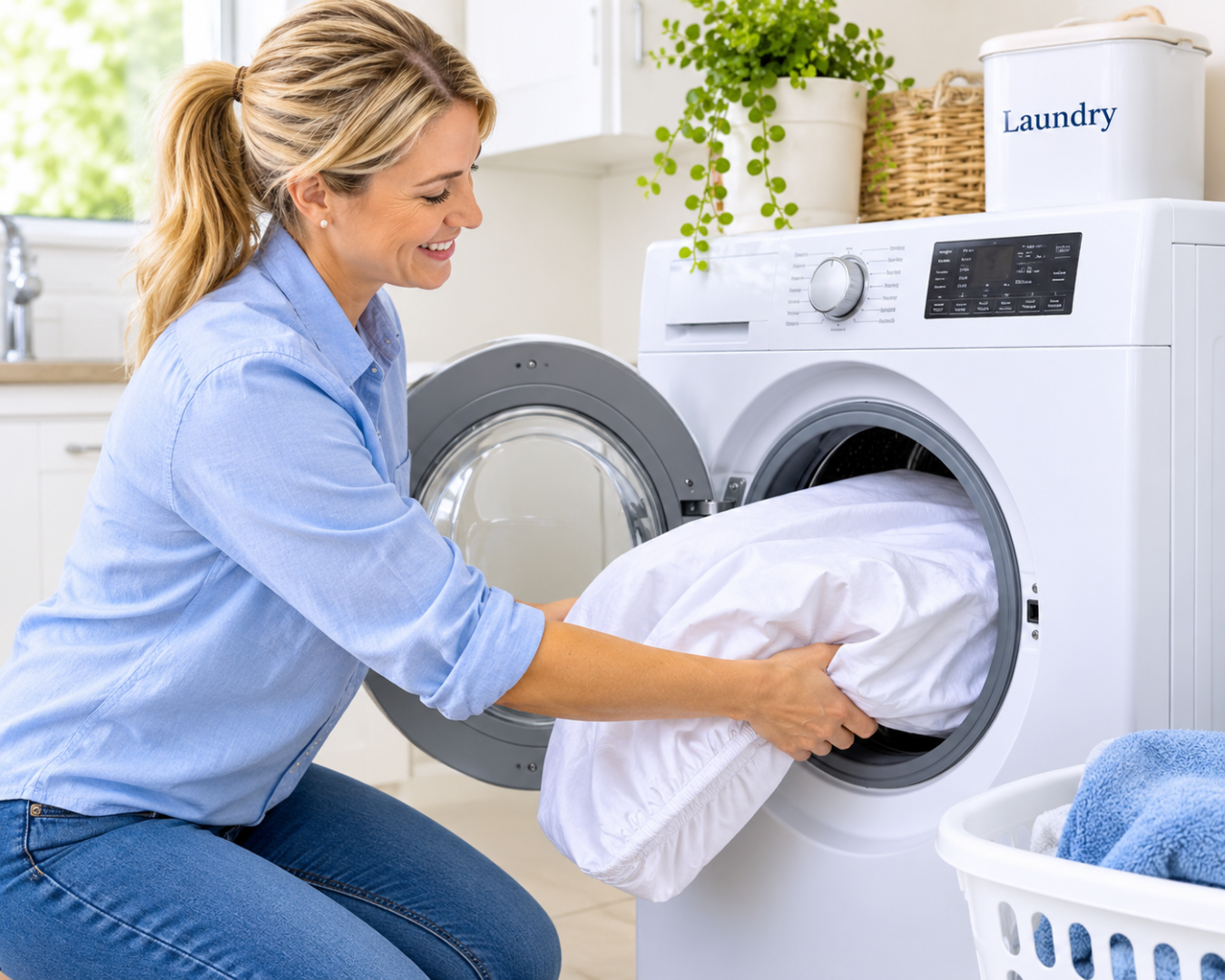
Quick answer: Most washable waterproof mattress protectors can be cleaned in a domestic washing machine using a suitable laundry detergent and the washing temperature specified by the manufacturer. Avoid excessive heat, unsuitable cleaning products and incorrect tumble-drying settings, as these may damage certain waterproof membranes. Always check the individual care label before washing.
Table of Contents
What Is a Waterproof Mattress Protector?
Why Is Correct Mattress Protector Care Important?
How to Wash a Waterproof Mattress Protector
What Washing Temperature Should You Use?
Can You Put a Waterproof Mattress Protector in the Dryer?
How to Dry a Waterproof Mattress Protector
What Detergent Should You Use?
How Often Should You Wash a Mattress Protector?
How to Clean Different Types of Mattress Protectors
Common Mattress Protector Washing Mistakes
How to Maintain the Waterproof Membrane
When Should You Replace a Mattress Protector?
Frequently Asked Questions
Choosing the Right Waterproof Mattress Protector
Why Choose Cover & Protect?
Final Verdict
1. What Is a Waterproof Mattress Protector?
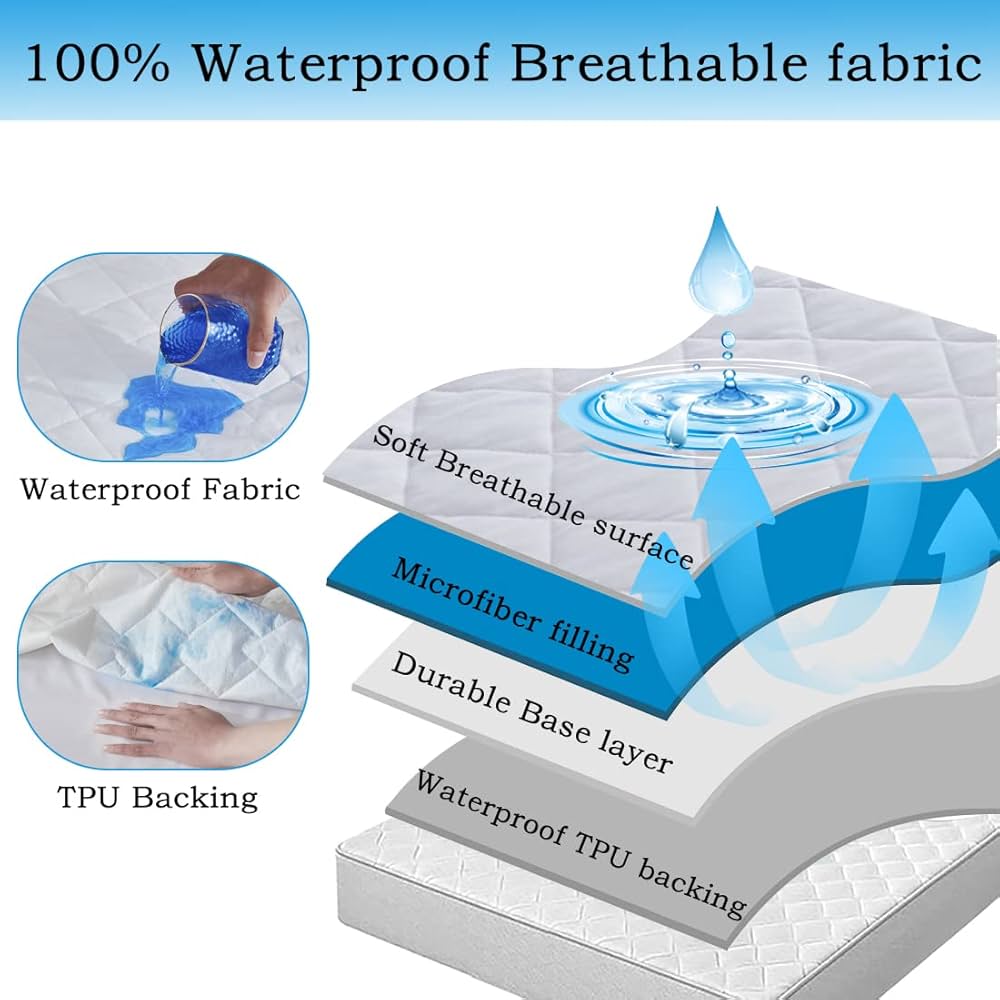
A waterproof mattress protector is a protective bedding layer designed to fit over a mattress and help prevent liquids from passing through to the mattress surface.
Most waterproof mattress protectors combine two main components:
Fabric surface: The upper layer provides a comfortable surface beneath the fitted sheet.
Waterproof backing: A protective membrane or coating helps prevent moisture from passing through to the mattress.
Depending on the product, the upper fabric may be cotton terry, bamboo jersey, Tencel jersey, knitted polyester or another suitable textile.
The waterproof layer is particularly important because it provides a barrier against everyday spills, moisture and accidental stains.
Unlike a standard fabric mattress protector, a waterproof version is specifically designed to provide additional liquid protection.
However, different products use different materials and construction methods. This means washing instructions are not necessarily identical across all waterproof mattress protectors.
Explore the waterproof mattress protector range at Cover & Protect to compare available styles and materials.
2. Why Is Correct Mattress Protector Care Important?
Regular cleaning helps maintain a clean and comfortable bedding environment.
A mattress protector sits underneath the fitted sheet and can collect dust, perspiration, body oils, loose fibres and everyday household particles over time.
Correct washing and drying are important for several reasons.
Maintaining the waterproof layer
The waterproof membrane is an important component of the mattress protector.
Incorrect washing temperatures, excessive heat or unsuitable cleaning products may affect some waterproof materials.
Following the manufacturer’s instructions helps reduce the risk of unnecessary deterioration.
Keeping bedding fresh
Regular laundering removes accumulated everyday dirt and perspiration from washable bedding products.
This helps maintain a fresh sleeping environment.
Preserving fabric quality
Different mattress protector fabrics require different levels of care.
For example, cotton terry, bamboo jersey and Tencel fabrics may have different washing and drying recommendations.
Using suitable laundry settings helps maintain the appearance and feel of the fabric.
Protecting your mattress investment

A properly fitted waterproof mattress protector helps protect the mattress against everyday spills, moisture and stains.
Maintaining the protector is therefore an important part of looking after your bedding.
3. How to Wash a Waterproof Mattress Protector
The correct way to wash a waterproof mattress protector depends on its fabric and waterproof backing.
The following general process provides a useful starting point. Always follow the specific manufacturer’s care label where instructions differ.
Step 1: Check the manufacturer’s washing instructions
Before washing, check the care label attached to the mattress protector.
Look for information about:
Maximum washing temperature.
Suitable washing cycle.
Recommended detergent.
Whether fabric softener is permitted.
Whether tumble drying is allowed.
Recommended drying temperature.
Whether ironing or dry cleaning is prohibited.
Do not assume all waterproof mattress protectors can be washed using the same settings.
Step 2: Remove the mattress protector
Remove the fitted sheet, pillowcases and other bedding.
Carefully remove the mattress protector from the mattress without pulling excessively on the elasticated corners.
If the protector has accumulated loose debris, remove it before placing the product in the washing machine.
Step 3: Check for visible stains
If there are visible marks, follow the manufacturer’s stain-removal recommendations.
Where permitted, a small amount of suitable laundry detergent and cool water may help with light surface cleaning.
Avoid aggressive scrubbing, harsh chemicals or abrasive cleaning tools that could affect the fabric or waterproof backing.
Step 4: Select the correct washing cycle
Place the protector in the washing machine.
Use the washing cycle recommended on the care label.
A gentle or normal cycle may be suitable depending on the product’s construction.
Avoid overloading the washing machine. The protector needs sufficient room to move freely during washing.
Step 5: Add suitable laundry detergent
Use a suitable laundry detergent according to the manufacturer’s instructions.
Avoid using excessive detergent, as detergent residue may remain in the fabric.
Do not add bleach, fabric softener or other cleaning additives unless specifically permitted.
Step 6: Wash at the recommended temperature
Select the washing temperature specified by the manufacturer.
Some mattress protectors have higher-temperature washing instructions, while others require cooler washing.
The waterproof backing is particularly important when choosing the correct temperature.
Step 7: Remove promptly after washing
Once the washing cycle has finished, remove the protector from the machine.
Avoid leaving damp bedding products sitting in the washing machine for extended periods.
Step 8: Dry thoroughly
Follow the manufacturer’s instructions for air drying or tumble drying.
Make sure the protector is completely dry before placing it back on the mattress.
Never store or refit a damp mattress protector.
4. What Washing Temperature Should You Use?
One of the most common questions about waterproof mattress protectors is whether they can be washed at 40°C, 60°C or higher temperatures.
There is no single washing temperature suitable for every product.
The correct temperature depends on the fabric, waterproof membrane and manufacturer’s testing.
General washing temperature considerations
| Washing temperature | General consideration |
|---|---|
| 30°C | A cooler option for products with low-temperature care instructions |
| 40°C | Commonly used for everyday laundry where permitted |
| 60°C | Suitable for some products with higher-temperature care specifications |
| 90–95°C | Only appropriate for products specifically approved for high-temperature washing |
These temperatures are general reference points, not universal instructions for waterproof bedding.
Can you wash a waterproof mattress protector at 60°C?
Some waterproof mattress protectors are designed to tolerate washing at 60°C.
However, others may require a lower temperature.
Always check the care label before selecting a 60°C cycle.
Can you wash a mattress protector at 90°C?
Some specialist bedding products have high-temperature washing specifications.
However, a high-temperature wash should never be assumed suitable for every waterproof mattress protector.
Using a temperature above the manufacturer’s recommendation may damage the fabric or waterproof membrane.
Our recommendation: Always follow the specific care instructions supplied with your mattress protector rather than relying on a general washing temperature.
5. Can You Put a Waterproof Mattress Protector in the Dryer?
Whether a waterproof mattress protector can go in the dryer depends on its construction and care instructions.
Some products are suitable for tumble drying, while others require air drying or a particular temperature setting.
Why dryer temperature matters
Excessive heat may affect certain waterproof membranes, fabric coatings, elastic components and fitted edges.
If the product is not designed for tumble drying, heat exposure may shorten its useful life.
What should you check?
Before using a tumble dryer, check:
Whether tumble drying is permitted.
The maximum permitted temperature.
Whether a low-heat setting is required.
Whether the product should be removed while slightly damp.
Whether air drying is recommended instead.
Can you tumble dry a bamboo mattress protector?
Some bamboo mattress protectors permit tumble drying under specified conditions, while others recommend alternative drying methods.
The individual manufacturer’s care label must take priority.
For example, Protect-A-Bed® products have product-specific care instructions. Do not assume that the instructions for one Bamboo Jersey protector apply to every bamboo or waterproof bedding product.
6. How to Dry a Waterproof Mattress Protector
Correct drying is just as important as correct washing.
A waterproof mattress protector should be completely dry before it is returned to the mattress.
Air drying
Air drying can be a suitable option where permitted by the manufacturer.
For Australian households, consider the following:
Remove excess water according to the washing machine’s permitted spin settings.
Hang the protector evenly over a suitable drying rack.
Keep the fabric supported to avoid excessive stretching.
Allow sufficient airflow around the product.
Avoid direct high heat.
Check that both the fabric and backing are completely dry before reuse.
Tumble drying
If the care label permits tumble drying:
Use the specified temperature.
Avoid exceeding the manufacturer’s maximum setting.
Do not use high heat unless specifically approved.
Remove the protector promptly when the cycle finishes.
Check the backing and fabric before refitting.
Can you iron a waterproof mattress protector?
Generally, ironing should be avoided unless the manufacturer specifically permits it.
Direct heat from an iron may damage some waterproof membranes or coatings.
Can you put a damp mattress protector back on the bed?
No. A mattress protector should be completely dry before being placed back on the mattress.
Putting damp bedding on a mattress may trap moisture between the layers.
7. What Detergent Should You Use?
Choosing a suitable detergent is another important part of waterproof mattress protector maintenance.
For most washable bedding products, a suitable everyday laundry detergent is a practical starting point, provided it complies with the manufacturer’s instructions.
Detergents and cleaning products to consider carefully
Avoid assuming the following are suitable for every waterproof product:
Chlorine bleach.
Strong stain removers.
Harsh chemical cleaners.
Excessive detergent.
Fabric softeners.
Cleaning products containing unsuitable additives.
Some products may tolerate certain laundry additives, while others may not.
Should you use fabric softener?
Fabric softener is not recommended for some waterproof mattress protectors.
Depending on the material, residues may affect fabric performance or interfere with the manufacturer’s intended care process.
Check the product label before using it.
Should you use bleach?
Only use bleach if the manufacturer specifically allows it.
Some bleaching agents may damage coloured fabrics, textile fibres or waterproof components.
8. How Often Should You Wash a Mattress Protector?
The frequency of washing depends on the product, household environment and manufacturer’s recommendations.
A mattress protector should be washed whenever it becomes visibly soiled or wet.
For general household use, many people choose to wash their mattress protector periodically as part of their normal bedding maintenance routine.
Factors that influence washing frequency
Consider:
How often the bed is used.
Whether the protector has become visibly soiled.
Whether there have been spills or accidental moisture.
Whether pets regularly use the bed.
Whether the bedroom environment is humid.
The manufacturer’s recommended cleaning schedule.
A practical bedding maintenance routine
| Bedding item | Suggested maintenance |
|---|---|
| Fitted sheet | Wash regularly according to household use |
| Pillowcases | Wash regularly |
| Waterproof mattress protector | Follow care label and wash when soiled |
| Pillow protector | Follow care label and wash when needed |
| Quilt/doona protector | Follow care label and seasonal maintenance |
| Mattress encasement | Follow manufacturer cleaning instructions |
This is general household guidance rather than a fixed washing schedule for every product.
9. How to Clean Different Types of Mattress Protectors
Different fabrics have different properties and care requirements.
Understanding the material helps when choosing a mattress protector and maintaining it after purchase.
Cotton Terry waterproof mattress protectors
Cotton Terry mattress protectors have a soft, textured fabric surface.
They are commonly selected for their familiar cotton feel and practical everyday use.
When washing:
Check the maximum washing temperature.
Use a suitable detergent.
Follow the manufacturer’s drying instructions.
Avoid unapproved cleaning additives.
Bamboo Jersey waterproof mattress protectors
Bamboo Jersey products have a knitted fabric construction and are selected by customers looking for a soft bedding surface.
Care requirements vary according to the product’s construction.
Check the washing temperature and drying instructions supplied with the individual protector.
Tencel Jersey mattress protectors
Tencel-based fabrics are used in bedding products because of their textile properties and smooth surface.
Care requirements depend on the fabric blend and waterproof backing.
Follow the manufacturer’s recommended washing and drying instructions.
Knitted waterproof mattress protectors
Knitted mattress protectors may use different textile blends and backing materials.
Check the product specifications before washing.
Fully enclosed waterproof mattress encasements
A mattress encasement is different from a conventional fitted mattress protector.
It is designed to enclose the mattress on multiple sides, often using a zippered construction.
Some encasements have specific washing and handling requirements, particularly around zips and seams.
Always follow the instructions for the particular encasement.
Explore the waterproof mattress encasement information at Cover & Protect.
10. Common Mattress Protector Washing Mistakes
Incorrect washing and drying can affect the useful life of some waterproof mattress protectors.
Here are common mistakes to avoid.
Mistake 1: Using excessive washing temperatures
A high-temperature wash may damage some waterproof membranes.
Always check the manufacturer’s maximum temperature.
Mistake 2: Using too much detergent
Excess detergent can leave residues in bedding materials.
Use the recommended quantity for the washing load.
Mistake 3: Using unsuitable fabric softener
Some waterproof products are not designed to be washed with fabric softener.
Check the care instructions before adding it.
Mistake 4: Tumble drying at excessive temperatures
Excessive dryer heat may affect the waterproof backing.
Use only the permitted drying settings.
Mistake 5: Ironing the waterproof backing
Direct heat may damage some waterproof materials.
Avoid ironing unless specifically permitted.
Mistake 6: Overloading the washing machine
An overloaded machine may prevent the protector from washing and rinsing properly.
Allow enough room for the product to move freely.
Mistake 7: Putting the protector back on while damp
Always make sure the protector is completely dry before refitting.
Mistake 8: Ignoring the manufacturer’s care label
This is perhaps the most important mistake.
Different products have different fabric combinations and waterproof technologies.
Never assume that all waterproof mattress protectors have identical care requirements.
11. How to Maintain the Waterproof Membrane
The waterproof membrane is an important part of a waterproof mattress protector.
It is designed to help prevent liquids from passing through the product and reaching the mattress.
Proper maintenance helps reduce unnecessary wear.
Practical maintenance recommendations
Follow washing instructions
Use the correct washing temperature and cycle.
Avoid unnecessary chemical treatments
Do not use unapproved cleaning products, bleach or harsh stain removers.
Use permitted drying methods
Excessive heat can affect some waterproof materials.
Avoid rough handling
Take care when removing and fitting the protector, particularly around elasticated corners and seams.
Inspect periodically
Check the protector for:
Visible tears.
Damaged seams.
Peeling or deterioration of the backing.
Changes in the fabric surface.
Signs that the protector no longer provides reliable liquid protection.
How do you know if the waterproof layer is damaged?
Visible deterioration, damaged seams or persistent leakage may indicate that a protector needs replacing.
If you are unsure about its condition, refer to the manufacturer or consider replacing the product.
12. When Should You Replace a Mattress Protector?
A mattress protector does not necessarily need replacing after a set number of years.
Its useful life depends on construction, frequency of use, washing practices and general condition.
Consider replacing a mattress protector when:
The waterproof backing is visibly damaged.
The fabric has developed holes or tears.
Seams or elastic components are failing.
The protector no longer fits securely.
Liquid repeatedly passes through the protector.
The product shows significant deterioration.
A well-maintained protector should be inspected periodically rather than replaced solely because it has reached an arbitrary age.
If you are purchasing a replacement, check the mattress dimensions, depth, fabric and waterproof specifications before ordering.
13. Frequently Asked Questions About Washing Waterproof Mattress Protectors
How do you wash a waterproof mattress protector?
Check the manufacturer’s care label, place the protector in the washing machine using the approved cycle and temperature, and use a suitable laundry detergent. Dry according to the manufacturer’s instructions before putting it back on the mattress.
Can you machine wash a waterproof mattress protector?
Many waterproof mattress protectors are machine washable. However, washing temperatures and cycle requirements vary. Always check the product’s care label.
Can you wash a waterproof mattress protector at 40 degrees?
Some waterproof mattress protectors permit a 40°C wash, but the correct temperature depends on the fabric and waterproof membrane. Follow the manufacturer’s instructions.
Can you wash a waterproof mattress protector at 60 degrees?
Some products are approved for 60°C washing. Others require cooler temperatures. Never assume 60°C is suitable without checking the care label.
Can you tumble dry a waterproof mattress protector?
Some waterproof mattress protectors can be tumble dried using specified temperature settings. Other products require air drying. Check the manufacturer’s instructions before using a dryer.
Can you put a waterproof mattress protector in the dryer on high heat?
High heat should be avoided unless the manufacturer specifically permits it. Excessive heat may damage some waterproof membranes and fabric components.
Should you use fabric softener on a waterproof mattress protector?
Not unless the manufacturer permits it. Some waterproof products have specific detergent and fabric softener restrictions.
Can you iron a waterproof mattress protector?
Generally, avoid ironing waterproof mattress protectors unless the care label specifically allows it. Direct heat may damage the waterproof backing.
How often should a waterproof mattress protector be washed?
Wash it whenever it becomes soiled or wet, and otherwise follow the manufacturer’s recommended maintenance schedule. Washing frequency also depends on household use.
Why does my waterproof mattress protector feel different after washing?
Changes in fabric feel may be associated with washing, detergent residues, drying conditions or general wear. Check the care instructions and inspect the product for visible deterioration.
How do I know if my mattress protector is still waterproof?
Check for visible tears, damaged seams, peeling backing or signs of liquid passing through. If the waterproof layer appears damaged, consider replacing the protector.
Can I wash a waterproof mattress encasement?
Some waterproof mattress encasements are washable, but their care requirements may differ from fitted mattress protectors. Follow the specific manufacturer’s instructions, particularly for zippered designs.
Are bamboo waterproof mattress protectors machine washable?
Many are washable, but the recommended washing temperature and drying method vary by product. Always follow the individual care label.
What is the difference between a mattress protector and a mattress encasement?
A fitted mattress protector generally covers the sleeping surface and sides of a mattress. A mattress encasement is designed to enclose the mattress on all sides, usually with a zippered closure.
14. Choosing the Right Waterproof Mattress Protector
If you are considering purchasing a new waterproof mattress protector, it is worth comparing the construction, fabric and intended use before making a decision.
What should you look for?
Waterproof performance
Check that the product is specifically described as waterproof rather than simply water-resistant.
Fabric construction
Consider cotton terry, Bamboo Jersey, Tencel Jersey or other available fabrics.
Mattress depth
Check the fitted depth and ensure the protector accommodates your mattress.
Comfort
The surface fabric should be appropriate for use beneath your fitted sheet.
Washing requirements
Consider the manufacturer’s recommended washing temperature and drying instructions, particularly if you prefer products that are suitable for frequent laundering.
Product specifications
Read the product description carefully and check the manufacturer’s information before purchasing.
Explore waterproof mattress protection at Cover & Protect

Cover & Protect supplies genuine Protect-A-Bed® mattress and bedding protection products through authorised Australian distribution channels.
Our range includes different mattress protector fabrics and constructions to suit different household and accommodation requirements.
Explore:
15. Why Choose Cover & Protect?
Cover & Protect is an authorised direct-to-consumer distributor of genuine Protect-A-Bed® bedding protection products in Australia.
Established in 2007, we have supplied Australian households, accommodation providers and commercial venues with trusted, certified bedding protection solutions sourced through official supply channels.
Our specialisation includes:
Waterproof mattress protectors.
Mattress encasements.
Bed bug protection products.
Dust mite and allergy bedding protection.
Pillow protectors.
Quilt and doona protectors.
Commercial bedding and linen solutions.
We believe customers should have access to clear product information to help them understand the differences between bedding protection products, fabrics and construction methods.
Our direct-to-consumer supply model provides Australian customers with access to genuine Protect-A-Bed® products fulfilled directly through official supply channels.
Visit Cover & Protect to explore our bedding protection range.
For more information about our business and product specialisation, visit About Cover & Protect.
16. Final Verdict: How to Keep Your Waterproof Mattress Protector in Good Condition
Washing and maintaining a waterproof mattress protector correctly is important for preserving its fabric, waterproof backing and overall performance.
The most important rule is to follow the manufacturer’s specific care instructions.
Use the recommended washing temperature, a suitable laundry detergent and an approved drying method. Avoid excessive heat and cleaning products that may damage the waterproof membrane.
Regular inspection is also worthwhile. Look for signs of wear, damaged seams or deterioration of the waterproof backing, and replace the protector when it no longer provides reliable protection.
Whether you are purchasing a new mattress protector or maintaining an existing one, understanding its fabric and construction will help you make informed decisions about cleaning and care.
Explore the Cover & Protect range of waterproof mattress protectors and bedding protection products.
Cover & Protect – Australian Bedding Protection Specialists Since 2007.
Website: https://coverandprotect.com.au/
Sydney, NSW, Australia.
Phone: (02) 9316 6654
Email: sales@coverandprotect.com.au