
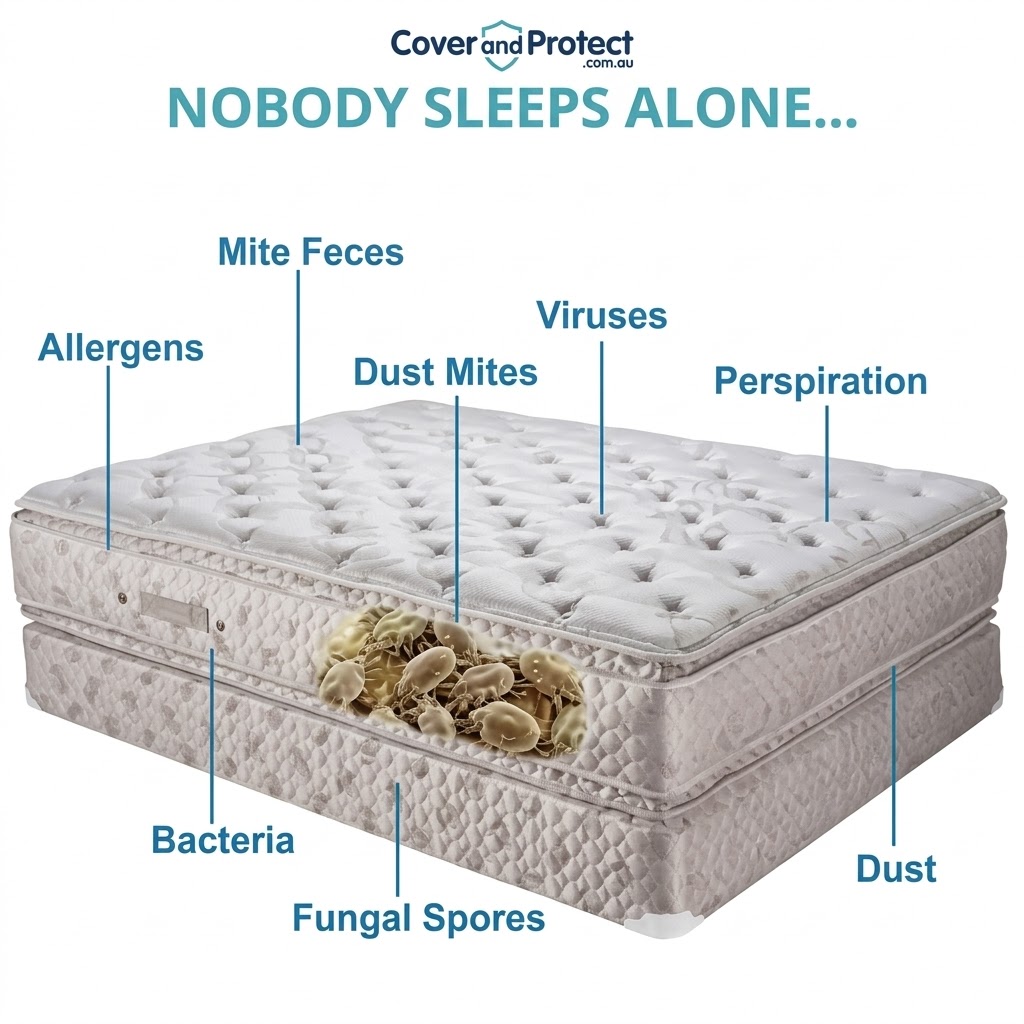
Your bed may look clean, but it’s home to dust mites, bacteria, sweat and allergens. Over time, these build up and can impact your health, skin, and sleep. The solution? Waterproof mattress protection, regular washing, and allergy-safe bedding designed for Australian conditions.
You spend nearly a third of your life in bed, yet most Australians never consider what’s actually building up beneath the sheets.
Every night, your body releases sweat, oils, and dead skin cells, creating the perfect breeding ground for microscopic organisms.
Over time, your mattress can become one of the least hygienic places in your home—without you even realising it.

Dust mites are microscopic pests that thrive in warm, humid environments—making Australian homes ideal.
They feed on dead skin cells and multiply rapidly, often reaching millions within a single mattress.
Their waste is a major trigger for:
Your mattress absorbs moisture every night.
On average, a person can release up to 500ml of sweat during sleep, which soaks into bedding layers.
This encourages:
Humans naturally shed skin cells daily.
These cells accumulate in your bed and:
Body oils and perspiration penetrate mattresses over time.
In Australia’s warmer climate, this leads to:
A bed contains dust mites, bacteria, sweat, dead skin cells and allergens that accumulate over time, especially without protective bedding. These microscopic contaminants can affect sleep quality, trigger allergies and impact overall health, making proper mattress protection essential.
Australia’s climate—especially in coastal cities like Sydney—creates ideal conditions for dust mites and bacteria to thrive.
Warm temperatures and humidity accelerate:
Modern homes often trap airflow, increasing humidity indoors.
Without proper ventilation, your bed becomes a sealed environment for microbial growth.
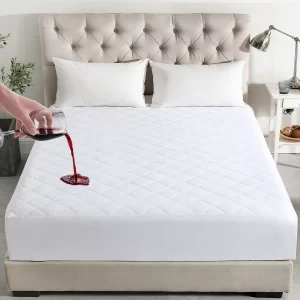
A high-quality waterproof protector forms a barrier between you and your mattress.
👉 Click Link to our Waterproof Mattress Protectors Collection

Encasements completely seal your mattress and pillows.
👉 Click Link to our Dust Mite & Allergy Bedding Collection
In Australia, weekly washing is essential due to climate conditions.
Ventilation helps reduce moisture.
If you notice any of the following, your bed may need protection:
These are signs of dust mite and bacteria build-up.
Beds commonly contain dust mites, bacteria, sweat, dead skin cells and allergens that build up over time.
Dust mites are not harmful themselves, but their waste can trigger allergies, asthma and respiratory issues.
Use a waterproof, dust mite-proof mattress protector and wash bedding regularly.
Bedding should be washed weekly due to Australia’s warm, humid conditions.
Your bed should support your health—not compromise it.
Without protection, your mattress becomes a breeding ground for allergens, bacteria and moisture.
The solution is simple and effective.
By using high-quality waterproof mattress and pillow protection, you can:
👉 Upgrade your sleep today with Cover & Protect’s premium bedding protection range.
OEKO-TEX Standard 100 Certification
Read more article from Cover and Protect
👉 Upgrade your sleep today with Cover & Protect’s premium bedding protection range.
Do you have questions about our products? We’re here to help! Whether you need guidance on the best protector for your needs or have inquiries about our offerings, our friendly team is happy to assist.
👉 Shop our range today and experience the best in bedding protection!
📞 Call us: 02 931 66654 (Mon-Fri) | 0408 113 089 (7 Days)
📩 Email us: sales@coverandprotect.com.au
At Cover & Protect, we’re more than just a bedding protection supplier—we’re your trusted partner in creating a safer, healthier, and more comfortable sleep